Desert Safari Egypt Tour – Travel notes
The Fortress of Shali, one of the symbols of the Siwa Oasis
In the heart of the Siwa Oasis lie the remains of a majestic 13th-century fortress surrounded by an impressive defensive wall. The word “Shali” comes from the Amazigh Berber language and means fortified town.
For centuries, Shali housed the Berber population of the oasis within hundreds of dwellings enclosed by its walls. This historic four- or five-story fortress offered protection against external threats, raids, and the harsh conditions of the desert.
The Fortress of Shali was built with a material called Kershef, made from a mixture of clay mud, salt, and rocks. Kershef was highly strategic: once dried, it formed extremely hard, thick walls and provided ideal insulation for the desert climate, keeping homes cool during scorching summers and warm throughout the cold winters.
However, it was the very Kershef bricks that eventually led to Shali’s downfall. In 1926, several days of heavy rain caused severe damage to the fortress structure, partially dissolving the mud bricks. On that occasion, all the inhabitants abandoned their homes and relocated to the surrounding area.
Despite only the old mosque, the maze of narrow alleys, and the crumbling buildings remaining today, Shali is still one of the main landmarks to visit in the Siwa Oasis.
The fortress remained abandoned until 2018, when restoration work began as part of a project launched by the European Union under the supervision of Egypt’s Ministry of Antiquities, supported by the Cairo-based company Environmental Quality International. The restoration used traditional construction techniques and local materials to preserve Siwa’s cultural heritage.
The initiative, called “Revival of the Shali Fortress”, transformed the fate of the site, bringing it back to life. Within the ancient city, new facilities have been established: a women’s and children’s counseling center, a ceramics school, a library, a small architecture museum, and two boutique hotels created from restored traditional houses, along with several local handicraft shops.
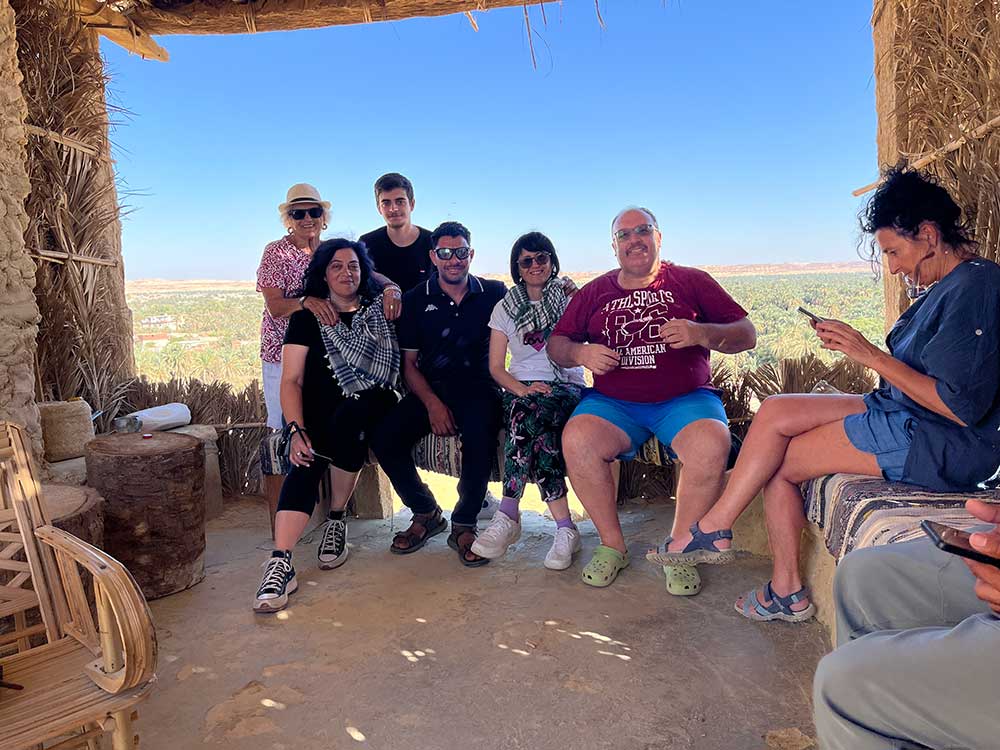
The library—founded through the dedication of Italian scholar Sergio Volpi, who chose to move and live in Siwa—holds 650 printed volumes and about 400 digital books, mainly focused on the oasis itself. From the top of the fortress, reachable through narrow alleys and uneven steps, visitors can enjoy a breathtaking 360° view of the Siwa Oasis and one of its most stunning sunsets.
I assure you, the climb is worth it!
What we recommend as a tour
If you want to see the Siwa Oasis with us | Travel proposal
Photo gallery